

Website Maintenance in Jordan: What It Actually Costs — and What Happens If You Skip It
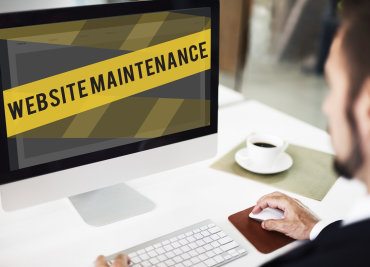
Short answer: basic maintenance for a company website in Jordan runs 30 to 80 JOD a month, or roughly 15% to 20% of the original project value per year — the same range we mention in our website cost guide, spelled out here in real line items. eCommerce and custom applications run higher, 100 to 300 JOD a month, because more moving parts means more that can break. Skipping it does not save that money. It defers it, usually at a worse exchange rate.
We are going to describe exactly what that monthly fee buys, because "maintenance" is one of the vaguest line items in any Jordanian web contract, and vague line items are how clients end up paying for nothing and agencies end up doing unpaid emergency work at 11pm.
What a real maintenance plan costs by site type
| Site type | Monthly (JOD) | What breaks without it |
|---|---|---|
| Brochure site, static content | 20 – 40 | Slow security drift, outdated SSL, aging plugins |
| Company site with a CMS | 30 – 80 | Plugin conflicts, admin account compromise, uncaught downtime |
| eCommerce store | 100 – 250 | Payment gateway breakage, stock sync errors, checkout failures going unnoticed |
| Custom web application | 150 – 300+ | Server-level failures, integration breakage, data corruption risk |
These are retainer numbers for ongoing care. A one-off "something is broken, fix it now" call typically costs more per hour than the same work done as part of a plan, for the same reason a same-day plumber costs more than a scheduled one.
Maintenance cost depends on how the site was built. If you are still choosing a platform, WordPress vs. a custom-built website compares the long-run upkeep of each, and our website development page shows how we build.
What you are actually paying for
Security patching
WordPress, and any CMS, ships vulnerability patches regularly. A site running six-month-old core software with outdated plugins is not a maintenance problem waiting to happen — in our experience it is usually already compromised and simply has not been noticed yet. We have taken over sites where the "slow loading" the client complained about was cryptocurrency-mining malware running in the background.
Backups that are actually tested
Every host claims to back up your site. The number that matters is not whether a backup exists, but whether anyone has ever restored from it to confirm it works. We have seen backup systems silently fail for months while everyone assumed they were fine, discovered only when they were needed. A maintenance plan that does not include a periodic restore test is not really backing anything up, it is just storing files.
Uptime monitoring
A site that goes down at 2am and comes back at 9am has been invisible to customers, and to Google, for seven hours nobody noticed. Real monitoring alerts a human within minutes, not whenever someone happens to visit the site and see an error.
Performance drift
Sites get slower over time — more images, more plugins, more database bloat — even when nothing is technically "broken." Since site speed is a direct ranking factor, a site with no performance maintenance is quietly losing search position every few months without anyone doing anything wrong.
Content and small changes
The unglamorous part: updating a price, swapping a banner, fixing a typo in the Arabic version somebody caught. If every small change requires a new quote and a week's wait, most businesses simply stop updating their site, and a stale site costs you more in lost credibility than the maintenance plan would have cost in a year.
What actually happens when you skip it
The site gets hacked, quietly. The most common outcome is not a defaced homepage — it is a handful of spam pages injected into your site that Google indexes and then penalizes your whole domain for, often discovered only when organic traffic has already dropped for weeks.
The SSL certificate expires. Browsers now show a hard "Not Secure" warning that stops most visitors before they read a word of your site. This is a five-minute fix that becomes a lost-week problem because nobody was watching for the renewal date.
The domain expires. This sounds too simple to be a real risk. It is the most common one we see. A domain registered under an employee who left the company two years ago, renewal email going to an inbox nobody checks, and the business finds out when the whole website — and every email address on that domain — stops working, sometimes for days while ownership is untangled.
A plugin update breaks the checkout, and nobody notices for a week. On an eCommerce site, an unmonitored broken checkout is not an inconvenience — it is measured in actual lost orders, and by the time a customer bothers to report it, several others simply left.
What maintenance does not need to include
You do not need an enterprise-tier retainer for a five-page brochure site with no CMS. You do need someone checking, at minimum quarterly, that the SSL certificate, domain, and hosting are current and the site still loads correctly. That is a much smaller commitment than a full monthly plan, and any honest agency will tell you when you do not need the bigger package.
Warning signs in a maintenance contract
No specifics on what is included. "Maintenance" as a single vague line with no breakdown of backups, updates, monitoring, and support hours is a placeholder, not a plan.
No mention of who owns the backups and where they live. If your host or agency disappears, you need to know your backups are retrievable by you, not locked in an account you do not control.
Support hours with no defined response time. "We will get to it" is not a service level. Ask specifically how many hours a routine fix and an emergency fix each take.
A price that seems too low to include real work. A 10 JOD-a-month maintenance plan on a CMS site is not doing security patching, tested backups, and monitoring for that price. Something on that list is not actually happening.
Frequently asked questions
Can I do maintenance myself?
For a simple site, yes, if you are disciplined about it — set calendar reminders for renewals and updates. Most businesses that say they will do this do not, six months in, which is the entire reason maintenance plans exist.
Is maintenance the same as hosting?
No. Hosting is where the site's files live. Maintenance is someone actively watching, updating, and fixing that site. You can have excellent hosting and a completely neglected site sitting on it.
What happens to my site if I stop paying my agency for maintenance?
The site itself keeps running as long as hosting and domain are paid — those are usually separate. What stops is the active watching, updating, and fast response, which is exactly when problems start accumulating quietly.
Is maintenance negotiable if my site rarely changes?
The update frequency can be lighter, but security patching and monitoring should not be skipped regardless of how static the content is — vulnerabilities target the software, not your content schedule.
The bottom line
Budget maintenance as a fixed annual cost from day one of your project, not as a surprise expense you discover the first time something breaks. For most Jordanian company websites, 400 to 900 JOD a year covers real security, tested backups, and monitoring — a fraction of what a single serious breach, a week of downtime, or a lost domain will actually cost you, both in direct expense and in the trust you lose while it is broken.
CS-Aspirations maintains sites we built and sites we did not, for clients across Jordan. If you are not sure whether your current site is actually being maintained or just quietly aging, get in touch for a free health check — we will tell you plainly what state it is in.
Maintenance is one line in the annual budget. The full 2026 website cost guide covers the rest, and how much SEO costs in Jordan covers the other recurring spend to plan for.